
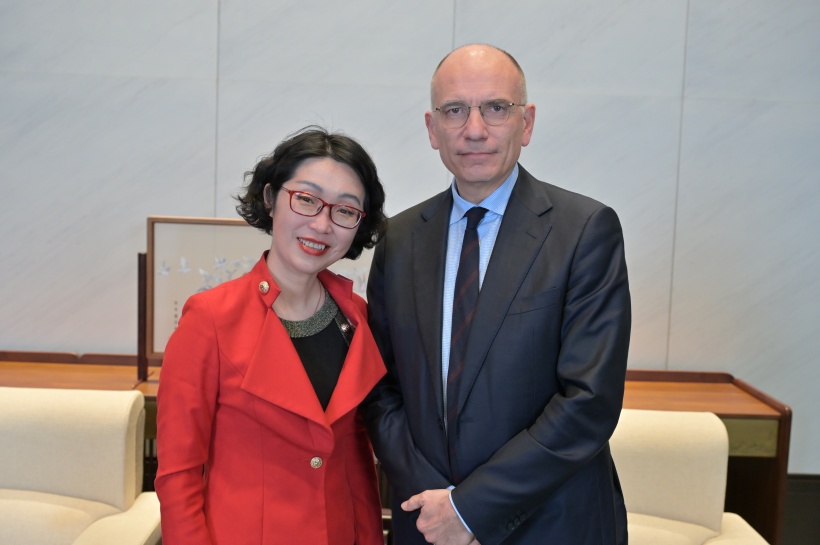
WhichMBA.net:How do you view the evolving role of universities in an era defined by AI, globalization, and geopolitical complexity?and what core competencies should they prioritize for students' near-term futures?
Enrico Letta:I believe universities worldwide are facing unprecedented challenges and opportunities: rooted in AI, accelerating globalization, and deepening geopolitical interdependence. The most urgent shift is moving away from siloed, discipline-bound education toward genuinely interdisciplinary training. Today's defining issues including pandemics, climate change, energy transitions, are never confined to one field; they fuse science, technology, economics, public policy, ethics, and diplomacy. To prepare students, we must dismantle traditional academic boundaries and design curricula that deliberately bridge technology with social sciences, data analysis with political judgment, and engineering rigor with humanistic insight. This isn't theoretical, it's operational necessity. A policymaker today must grasp the fundamentals of AI governance; a climate scientist must understand treaty negotiation and institutional design. That integration is no longer optional, but foundational.
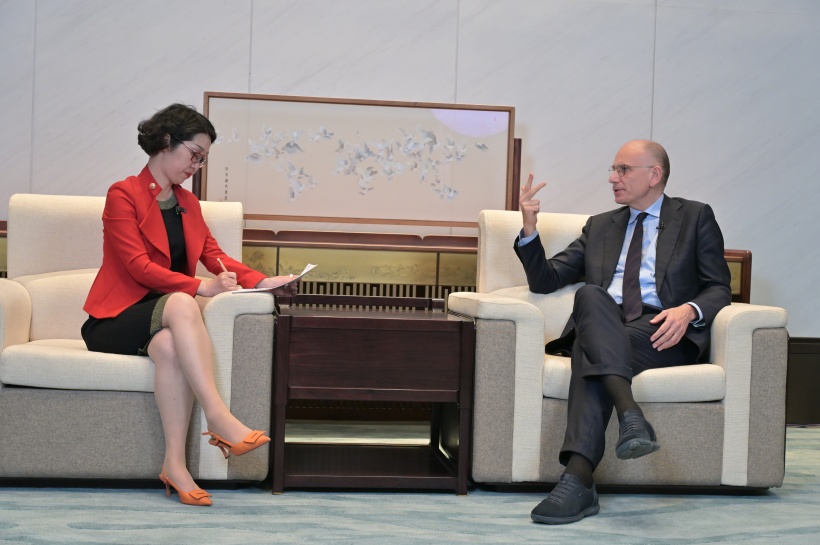
WhichMBA.net:What concrete initiatives does IE University implement to foster interdisciplinary learning?and how do you structure student experiences across time, space, and disciplines
Enrico Letta:At IE University, we embed interdisciplinarity not as an add-on but as architecture. First, our degree programs are intentionally multi-location: students spend semesters across Madrid, Shanghai, Nairobi, or Buenos Aires, not just for language or culture, but for full immersion in distinct institutional, regulatory, and societal contexts.
Second, we compress and extend time intentionally: alongside traditional four-year bachelor's degrees, we offer intensive three- or six-month executive education modules programs for professionals already in the workforce, because lifelong learning is no longer aspirational but essential.
Third, we replace passive knowledge transfer with active practice: simulations form a core pedagogical pillar. In my own teaching, I use real-world policy simulations, like negotiating a global health agreement or designing a carbon market where students confront trade-offs, miscommunication, and unintended consequences in real time. These aren't theoretical exercises; they build resilience in judgment, sharpen the ability to ask precise questions, and reveal gaps between textbook models and lived complexity.
WhichMBA.net:Given the rise of AI as a ubiquitous knowledge tool, how should universities redefine their value proposition?shifting from knowledge transmission to something more dynamic and relational?
Enrico Letta:Universities must stop competing with AI on information delivery, and instead double down on what AI cannot replicate: cultivating discernment, building intellectual compasses, and sustaining human-centered learning ecosystems. Yes, students can access facts instantly, but knowing which facts matter, how to frame the right question, and why one interpretation outweighs another. That requires mentorship, dialogue, and iterative feedback. In AI-rich classrooms, the teacher's role intensifies: it's no longer about lecturing, but about diagnosing understanding, from reading eyes, adjusting explanations, challenging assumptions, and guiding students to interrogate sources, detect bias, and synthesize across domains. That demands deep, sustained interaction, not just horizontal peer networks, but vertical relationships where experience meets curiosity. Our campus is thus less a repository and more a living laboratory.It's a platform where theory meets practice, where practitioners like ambassadors, central bankers, tech founders, teach alongside scholars, ensuring students learn not only what is known, but how knowledge is made, contested, and applied.
WhichMBA.net:How do you interpret the “fifth freedom” of the European single market?
Enrico Letta:The European single market was conceived last century in the eighties, in the nineties as the free circulation of four freedoms of goods, services, capitals and people. These four goods are very much based on what is tangible, what we touch and it was the spirit of last century, and today’s world is based on the strength of the intangible: driven by data, algorithms, research breakthroughs, and cross-border ideas.
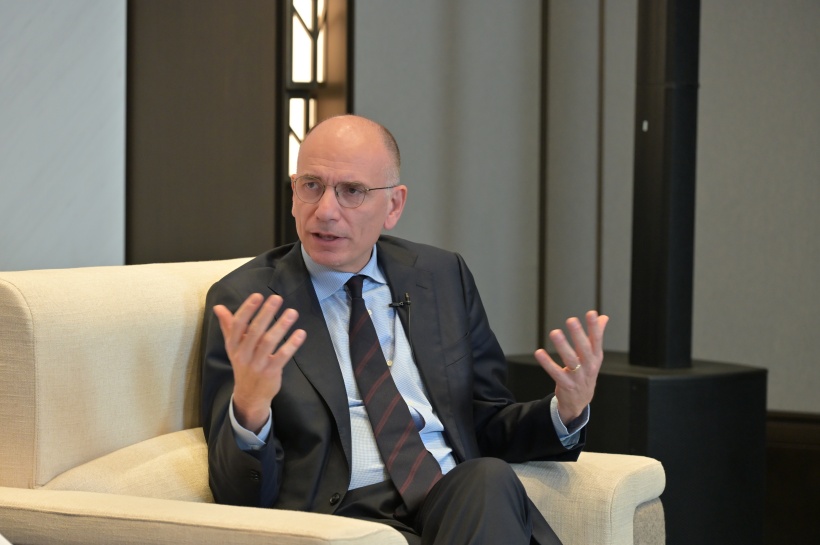
My proposal for a "fifth freedom"-the freedom of knowledge-is not merely symbolic; it is profoundly strategic. This concept demands that we treat education, research, and innovation as fully mobile, tradable, and investable assets across borders, akin to capital itself.
To realize this, we must dismantle barriers to academic mobility far beyond existing frameworks, harmonize the recognition of credentials, and mobilize large-scale, pan-European funding for collaborative research and talent development. Without such decisive action, Europe risks exporting its brightest minds to ecosystems like that of the United States, which offer not only opportunity but an integrated support system for transforming ideas into tangible impact.
Ultimately, the fifth freedom aims to anchor talent within Europe. The goal is not to restrict movement, but to make Europe the most compelling place in the world to build a future, rather than merely a place to study.
WhichMBA.net: Considering the different backgrounds of leaders that European ones often trained in law or the humanities, while Chinese leaders frequently come from science and engineering, what mindsets should future leaders develop to truly understand each other and work together effectively?
Enrico Letta: Actually, that contrast isn't a barrier at all. It's a huge learning opportunity. European traditions tend to focus on normative reasoning, history, and process, whereas Chinese approaches often prioritize systems thinking, feasibility, and speed. Neither is better, but both are incomplete on their own. A climate deal will fail if negotiators lack scientific literacy, just as it will fail if scientists ignore diplomatic realities. A tech infrastructure project will stall if engineers disregard privacy norms, or if policymakers ignore technical limits. So, the key is integration. Leaders need to be fluent in both worlds. Not necessarily as experts in everything, but as translators who know when a technical solution needs an ethical frame, or when a political consensus needs a technical reality check. This means we need curricula that force collaboration between labs and lecture halls, joint projects between engineering and policy schools, and grades that reward synthesis over specialization. It's not about erasing differences, it's about building bridges strong enough to carry complex and shared work.
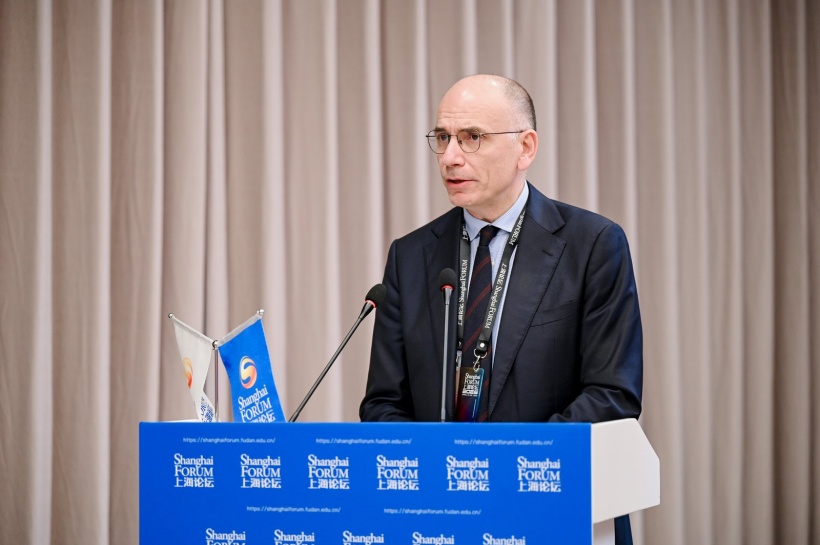
WhichMBA.net: How do you reconcile being an academic, a policymaker, and a former head of government? What does that path tell us about leadership today, when everything is constantly being disrupted?
Enrico Letta: I don't see my identity as something fixed. It's continuously reconstructed through engagement with students, institutions, crises, and now technologies like AI. I moved from the classroom to the cabinet and back to campus not to collect titles, but to test ideas in different arenas. I wanted to see which theories hold up under pressure, which policies actually survive implementation, and which educational models spark real learning. That kind of fluidity is essential now. Globalization, AI, and climate change don't care about disciplinary or sectoral boundaries, and leaders can't either. Staying relevant means embracing discomfort. You have to learn new tools, question old assumptions, and stay open to being taught by students, practitioners, and peers from all over. Rigidity is the biggest risk. Real resilience comes from curiosity, humility, and the willingness to evolve not just your knowledge, but your very sense of purpose.
WhichMBA.net: What specific expectations do you have for faculty in this changed landscape? How do you balance deep scholarship with real-world relevance when hiring and developing professors?
Enrico Letta: Faculty really need to embody a duality: deep theoretical mastery combined with proven practical engagement. We actively recruit practitioners like former ambassadors, regulators, startup founders, NGO directors. They are not just as guest speakers, but as core faculty who help design and teach courses. For a student studying international relations, hearing how the UN Security Council actually functions from someone who sat at that table is irreplaceable. But theory is still vital. Practitioners need scholars to ground their experience in frameworks, challenge their biases, and connect specific cases to broader patterns. So we don't look for "either/or", we demand "both/and." That requires investment, like mandatory AI-literacy training for all faculty, incentives for curriculum redesign, and protected time for collaborative course development. And yes, we are firm about this: adaptation isn't optional. If a professor resists integrating simulations, refuses to engage with AI-assisted teaching, or dismisses practitioner input as "not academic," they aren't just failing to keep up. They are failing their students' future.
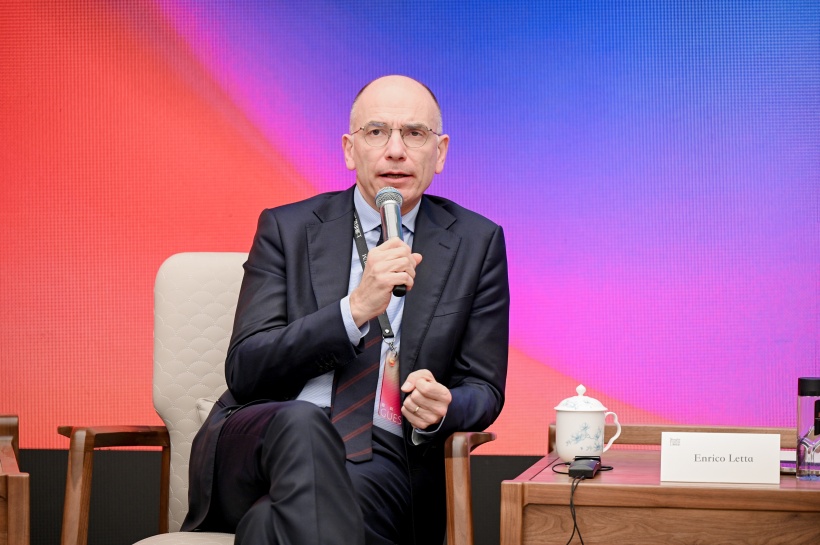
WhichMBA.net: For students who feel uncertain about investing years in formal education amid AI disruption and economic volatility, what would you say about the enduring value of the university journey?
Enrico Letta: This is a vital point. University isn't about downloading knowledge; it's about upgrading your operating system. AI can give you answers, but university teaches you how to ask the right questions, how to weigh conflicting evidence, how to build trust across differences, and how to sustain curiosity over decades. The bachelor's, master's, or executive program are not endpoints. They are calibrated phases in lifelong learning. Each builds distinct capacities: undergrad cultivates agility, graduate work sharpens precision, and executive education renews judgment. None replaces the other, and none is obsolete. The world doesn't reward static knowledge. It rewards adaptability, ethical grounding, and the ability to learn how to learn. Yes, AI changes everything. But the deeper truth is unchanged: a mind shaped intentionally remains your most powerful, portable, and future-proof asset.
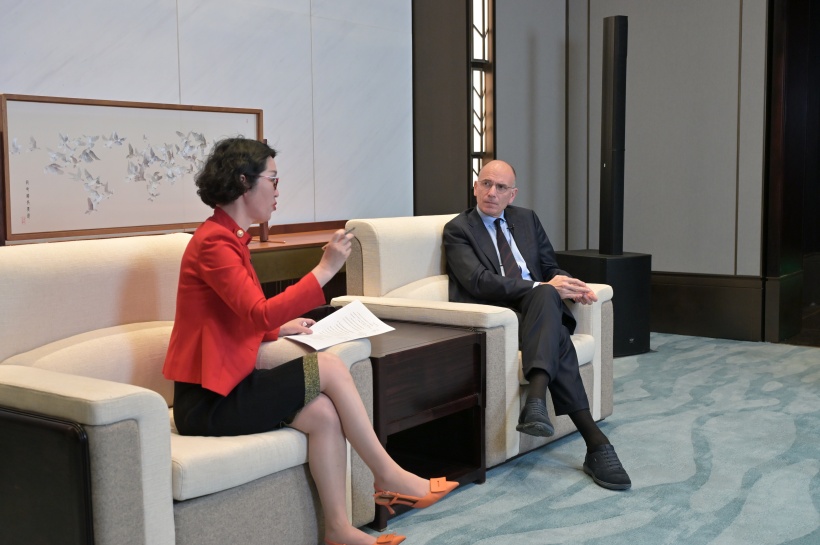
Editor’s Note:
As former Prime Minister of Italy and current Dean of IE School of Politics, Economics & Global Affairs, Professor Enrico Letta speaks with the institutional vision of a European statesman and the operational awareness of an educational leader. Our conversation centered on a core thesis: In an era where AI is dismantling the authority of knowledge, the irreplaceability of universities lies precisely in their "relational" and "processual" nature, which means not in delivering answers, but in forging the capacity to ask questions; not in storing information, but in building a compass for knowledge; not in training specialists, but in cultivating "translators" capable of navigating complex systems. This philosophy offers a valuable mirror for the reform of China's business schools today.